

Brain injuries from car crashes can range from mild concussions to severe traumatic brain injuries, and most times come with long-term physical, cognitive, or emotional effects. Knowing the settlement process helps victims receive fair compensation for medical expenses, lost income, and ongoing medical care especially if the car crash was due to someone else's negligence..
The average brain injury settlement from a car accident ranges from $100,000 to several million dollars, depending on the severity, long-term impact, and liability factors. More severe cases that involve permanent injury or loss of quality of life tend to result in higher settlements or jury awards.
Worried about what your brain injury case is worth? At My Injury Pros, we know how complex car accident cases can be and how insurance companies may try to settle for less than you deserve. Our dedicated legal team is here to fight for the full compensation you're entitled to. Focus on healing while we handle the rest. Contact us now to schedule a free consultation!
This post will break down the typical settlement ranges for brain injuries from car accidents, factors that influence compensation amounts, and what victims need to know to pursue a fair claim.
What Is a Traumatic Brain Injury (TBI)?

A traumatic brain injury (TBI) occurs when normal brain function is disrupted due to a sudden jolt, blow, or penetration to the head. Common types include concussions, contusions (bruising of the brain), and diffuse axonal injuries, which involve widespread damage from the brain rapidly shifting inside the skull. Traumatic brain injuries can be classified as either a closed head injury (no skull fracture) or an open head injury (where the skull is penetrated or broken).
Symptoms of a traumatic brain injury may range from mild confusion and headaches to severe impairments like memory loss, difficulty concentrating, mood swings, or even seizures. Some effects, like post-traumatic stress disorder, can be long-term and will likely affect a person's ability to work, interact socially, or live independently. Unfortunately, brain injuries often go undiagnosed at first because their symptoms can be subtle or delayed.
Car accidents are a leading cause of traumatic brain injuries. Catastrophic injuries like TBIs result from whiplash, hitting the head on a steering wheel or window, or the brain jolting from sudden deceleration. Because symptoms may not appear immediately, victims are advised to seek medical care right away. Delayed symptoms can complicate head injury claims. Properly documenting and following up care are critical to proving the injury and securing rightful compensation.
How Much Compensation Can You Get for a Brain Injury?
Compensation for a brain injury can vary widely based on factors like the severity of the injury, medical bills, lost income, applicable state laws, and the limits of insurance coverage. More severe injuries that cause long-term disability or cognitive impairment typically result in higher settlements than mild traumatic brain injury cases like concussions.
Generally, traumatic brain injury settlements can range from $20,000 for minor cases to several million dollars for life-altering or severe injuries. Victims with permanent impairments or extensive financial losses often fall on the higher end of this spectrum.
| Injury Severity | Estimated Settlement Range | Example Scenario |
|---|---|---|
| Mild Traumatic Brain Injury | $20,000 – $100,000 | Short-term symptoms, full recovery expected, minimal lost work time |
| Moderate Traumatic Brain Injury | $100,000 – $500,000+ | Cognitive or physical impairments that last months or years, rehab required |
| Severe Traumatic Brain Injury | $500,000 – $2,000,000+ | Permanent brain damage, inability to work, ongoing care or assisted living needed |
| Catastrophic TBI | $2 million – $10 million+ | 24/7 care, vegetative state, loss of independence, major impact on quality of life |
How Do Brain Injury Car Accident Settlements Vary by State?
The average settlement for traumatic brain injuries varies widely depending on the state’s insurance laws, fault rules, and whether there are caps on damages.
- Average settlement for traumatic brain injury in California: California has no caps on personal injury damages and follows an at-fault liability system. Settlement amounts typically range from $100,000 to several million dollars, depending on the severity of the injury. In serious cases, victims may pursue full compensation from the at-fault driver, including damages for pain and suffering, lost income, and long-term care.
- Average settlement for traumatic brain injury in Florida: For personal injury, Florida uses a no-fault insurance system. Minor brain injury claims are typically capped between $10,000 and $50,000 under Personal Injury Protection (PIP). However, if the injury meets Florida’s legal threshold for being classified as “serious,” victims may be eligible for significantly higher compensation beyond PIP limits.
- Average settlement for traumatic brain injury in New York: New York also follows a no-fault system. Unless the brain injury qualifies as “serious,” compensation is usually limited to PIP coverage. That said, severe TBI cases that surpass the legal threshold can lead to six-figure settlements or more, especially when long-term care or lost earning capacity is involved.
What Factors Affect Traumatic Brain Injury Settlements?
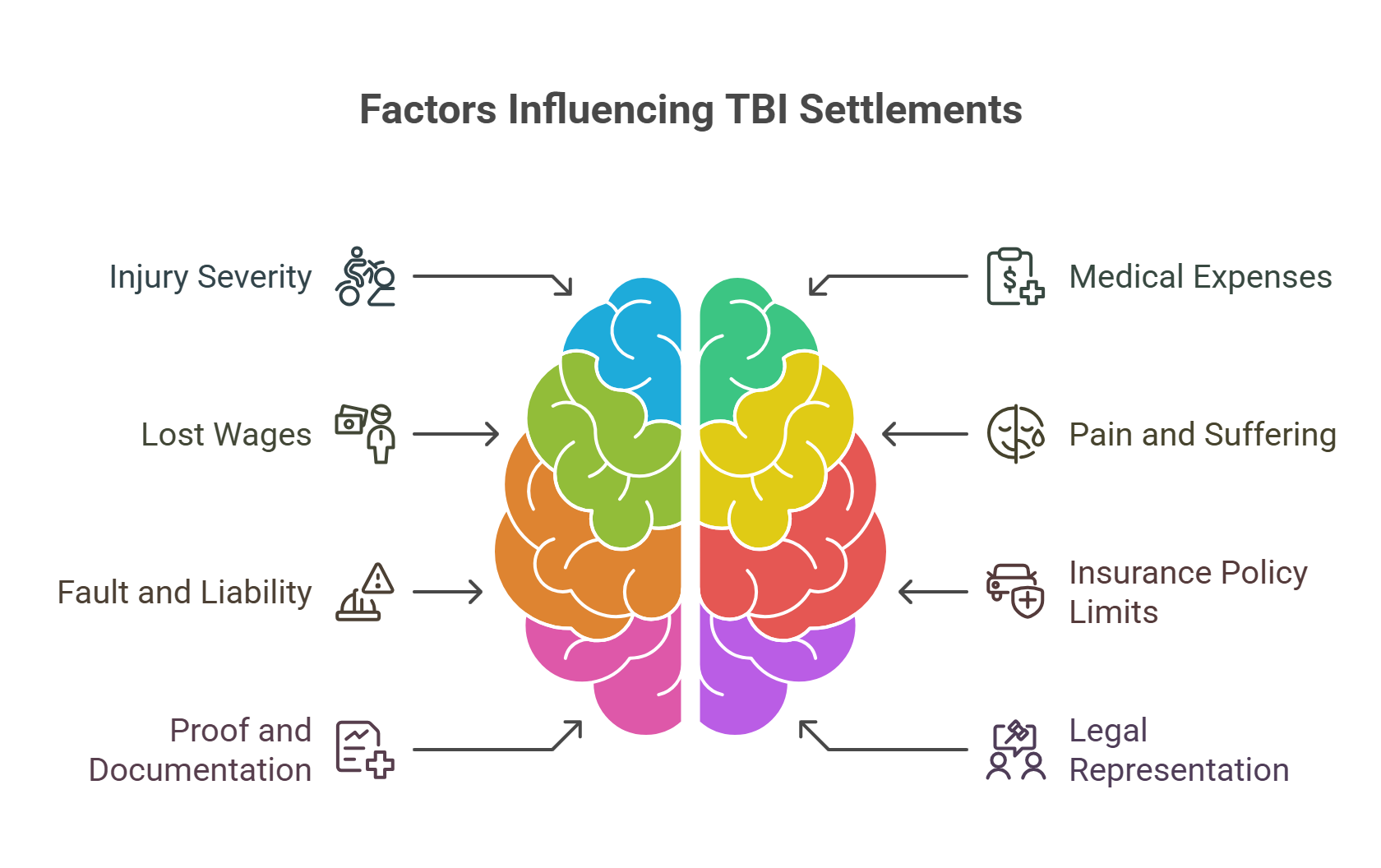
Several key factors influence the settlement value of a TBI claim. These factors include the severity of the injury and its long-term impact on daily life. Other important considerations are medical costs, lost income, liability, and the strength of the evidence presented.
Injury Severity
Mild TBIs like concussions typically result in smaller settlements. At the same time, severe brain injuries with lasting cognitive or physical impairments can lead to much higher payouts due to their long-term impact to reduce the financial burden on the victim.
Medical Expenses
Higher medical costs, such as surgery, rehab, physical therapy, and long-term medication, can increase your settlement, especially if future treatment is needed. The more extensive and ongoing your medical care, the stronger the justification for a higher compensation amount.
Lost Wages and Earning Capacity

If the injury causes missed work or prevents you from returning to your job, compensation increases to reflect lost wages and reduced earning potential. This includes not only past income lost but also projected future losses if you're unable to return to the same line of work. Expert testimony or vocational assessments may be used to demonstrate how your career prospects have been impacted.
Pain and Suffering
Emotional distress and reduced quality of life are factored in and are calculated using a multiplier of your medical costs. They can also be calculated based on the severity of symptoms the victim suffered.
Fault and Liability
Your compensation may be reduced if you're partially at fault for the accident. For example, being 20% responsible could lower a $100,000 settlement to $80,000. However, in cases where the other party acted with extreme recklessness or intentional harm, you may still be eligible for punitive damages.
Insurance Policy Limits
Settlements are often capped by the at-fault party’s insurance. This means that you may not recover more than, say, a $100,000 policy limit without other coverage.
Proof and Documentation
Clear medical records, MRI results, and expert opinions strengthen your case and support a higher settlement offer. Having detailed documentation shows the severity of your injuries and the necessity of treatment.
Photos, witness statements, and consistent reports can also help validate your claim and support the timeline of your recovery.
Quality of Legal Representation
Experienced attorneys can build stronger cases, use expert witnesses, and negotiate better outcomes than going it alone without a TBI lawyer. They also understand how to counter lowball offers from insurance companies and fight for the full value of your claim.
How to Maximize a Settlement for Traumatic Brain Injury

To maximize a traumatic brain injury settlement, it's important to document all symptoms and medical treatments thoroughly. Follow every recommendation from your healthcare providers, attend all appointments, and keep copies of bills, reports, and diagnostic tests to support your personal injury case.
Maintain a daily symptom diary that details how the injury affects your life, from headaches and memory issues to emotional struggles. Most importantly, work with an experienced personal injury attorney who understands TBI cases and can negotiate aggressively to ensure you receive a full and fair settlement.
How Can a Traumatic Brain Injury Lawyer Help Your Case?
An experienced TBI lawyer can make a big difference from the very start of your case. They help preserve vital evidence, manage communication with insurance adjusters, and protect you from accepting lowball settlement offers before the full impact of your injury is known. Early legal involvement makes certain that your rights are protected while you focus on recovery.
An experienced personal injury lawyer builds a strong case by collecting medical records, crash reports, witness statements, and expert opinions. They also calculate the full settlement value of your claim, both financial (like medical bills and lost income) and emotional (like pain, suffering, and reduced quality of life). This detailed preparation is key to securing fair compensation.
If the insurance company won’t offer a fair settlement amount, your lawyer can take the case to court and advocate on your behalf. They also ease the emotional stress by guiding you through the legal process and answering your questions along the way. Best of all, most personal injury attorneys work on a contingency fee basis. This means you don’t pay unless they win your personal injury case.
How Long Does It Take to Settle a Brain Injury Case?
The timeline for settling a brain injury case can vary significantly based on how severe the injury is and the complexity of the claim. Mild brain injury cases may settle within a few months, especially if gross negligence or liability is clear and symptoms resolve quickly. However, more serious or disputed traumatic brain injury cases, especially those that involve long-term care, lost wages, or significant life changes, can take a year or more to resolve, particularly if the case goes to litigation.
One key reason serious brain injury cases take longer is the need to reach Maximum Medical Improvement (MMI) before agreeing to a TBI settlement. MMI means your condition has stabilized, and your doctors can accurately assess long-term effects and future medical needs. Settling too early can result in compensation that doesn’t fully cover ongoing medical treatment, future medical expenses, or lost earning capacity. It's important to wait until a clear medical picture is available before finalizing a claim.
Want to Maximize Your TBI Settlement?
Brain injuries can be life-altering. They affect everything from memory and concentration to physical abilities and emotional well-being. Even a seemingly mild injury can lead to long-term challenges that impact your work, relationships, and daily life.
Because of the serious and often unpredictable effects of brain trauma, it’s crucial to consult an experienced personal injury attorney before accepting any settlement. A lawyer can help ensure you receive the full compensation you deserve for both current and future losses.
Feeling Pressured to Settle After a Brain Injury? At My Injury Pros, we understand how life-changing these injuries can be and fight to make sure you’re compensated for everything, from medical bills to future care and lost quality of life. Don’t settle for less than you deserve. Contact us today for a free case evaluation!
Frequently Asked Questions
What Is the Life Expectancy of Someone With a Traumatic Brain Injury?
The life expectancy of someone with a traumatic brain injury depends on the severity of the injury, but moderate to severe cases can reduce lifespan by several years to decades due to complications and long-term health effects.
What Evidence Do You Need in a Traumatic Brain Injury Claim?
To support a traumatic brain injury claim, you need medical records, diagnostic imaging (like CT or MRI scans), expert testimony, accident reports, witness statements, and documentation of symptoms and their effects on daily life.
What Can You Be Compensated for in a Brain Injury Case?
In a brain injury case, you can be compensated for medical expenses, lost income, pain and suffering, emotional distress, rehabilitation costs, and loss of quality of life.
How Long Does It Take to Settle a Traumatic Brain Injury Case?
Settling a traumatic brain injury case can take anywhere from several months to a few years, depending on the injury’s severity, medical recovery, and legal complexities.
What if I Wasn’t Wearing a Seatbelt?
If you weren’t wearing a seatbelt, you can still pursue compensation for a brain injury, but your settlement may be reduced due to comparative negligence laws.
Can I Still Sue if the Other Driver Was Uninsured?
Yes, you can still sue if the other driver was uninsured, and you may be able to recover compensation through your own uninsured motorist coverage or by filing a personal injury lawsuit directly against the at-fault driver.
Why Settling Too Soon After a TBI Can Be Risky?
Settling too soon after a traumatic brain injury can be risky because the full extent of the injury and long-term medical needs may not yet be known, potentially leading to inadequate compensation.