
Knowing what to do after a car accident in California starts with safety, documentation, and protecting your rights. In our experience, taking the right steps immediately significantly affects your personal injury claim and compensation.
At MyInjuryPros, we help injured drivers navigate insurance companies and legal representation with confidence. With years of experience handling California car accident claims, we know what insurers look for and push back on. We recommend speaking with our team as soon as possible to avoid costly mistakes.
This blog covers the exact legal steps to take after a crash, from the accident scene to filing an insurance claim. We also explain medical care, fault, evidence gathering, and when legal action may be crucial.
What Are Immediate Steps After An Accident?
In our experience, the minutes after a car accident feel confusing and stressful. The actions you take immediately can affect safety, insurance coverage, and any future personal injury claim. We recommend focusing on safety first, then documentation, and finally reporting the accident.
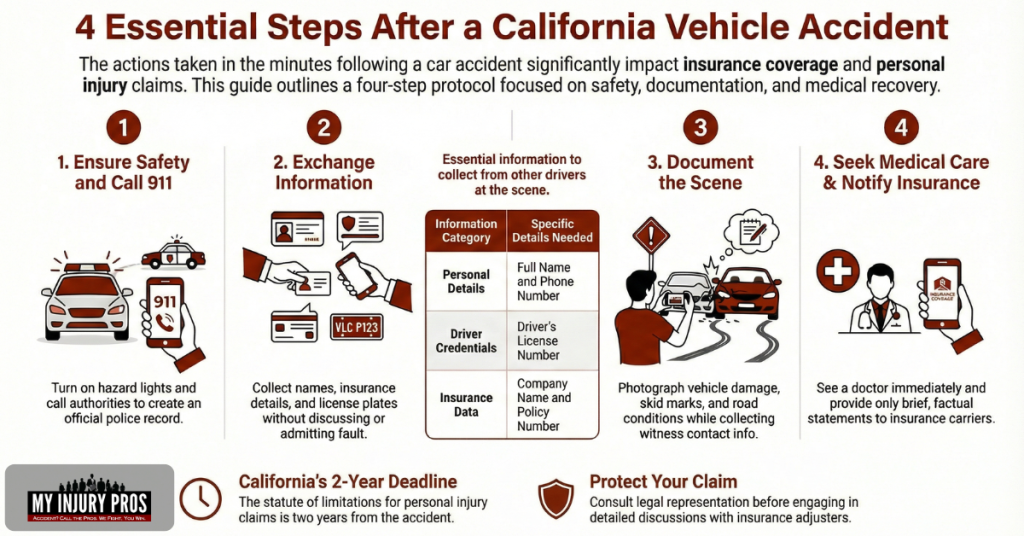
These steps will help protect your health and your right to pursue compensation:
1. Ensure Safety and Call Authorities
Your first priority after a crash is safety at the accident scene. Turn on hazard lights immediately and check for imminent danger. If possible, move vehicles to a safe location to prevent another collision.
Furthermore, call 911 and report the accident as soon as possible, even if injuries seem minor. A police report creates an official record and may document fault. In our experience, insurance companies rely heavily on this report during an insurance claim. In all that you do, keep in mind that the statute of limitations for filing a lawsuit after a car accident in California is two years from the date of the accident for personal injury claims.
According to our Partner, Natalie Nassi, “Safety and documentation are the foundation of every strong case.”
2. Exchange Information
After safety is secured, exchange information with the other party involved. Collect names, phone numbers, and insurance information from all drivers involved. Make sure to record the insurance company, policy number, and driver’s license details.
We recommend staying calm and avoiding any discussion of fault. For instance, even saying “I’m sorry” can be misinterpreted later. If a driver refuses to share information, note it and inform the police. Also record license plate numbers and basic vehicle descriptions to avoid later disputes.
“Clear information exchange prevents delays and disputes with insurance adjusters,” Natalie Nassi explains.
3. Document the Scene
Documenting the scene is one of the most important steps after a California car accident. Take photos of vehicle damage, skid marks, and damaged property. Capture wide shots of the accident scene and close-ups of the collision impact. Make notes about the time, date, weather, and road conditions.
For example, wet pavement or poor lighting can affect fault determinations. If witnesses are present, collect their names and phone numbers. In our experience, early evidence often strengthens a civil lawsuit if negotiations fail.
4. Seek Medical Attention and Notify Insurance
Always seek medical attention as soon as possible, even if injuries feel minor. Some injuries appear hours or days later. Medical records connect your injuries to the accident and support medical bills and lost wages.
Notify your insurance company promptly, but keep statements brief and factual. We recommend speaking with legal representation before detailed discussions with insurance carriers. Insurance adjusters work to limit payouts, not maximize your compensation.
How Do You Handle Medical Concerns?
In our experience, medical concerns are one of the most overlooked parts of a car accident. Many people focus on vehicle damage and insurance claims first, which can be a mistake. Your health directly affects your personal injury claim and long-term recovery. We recommend treating medical care as a top priority, even after a minor crash.

Here's a step-by-step guide on how to handle medical concerns:
Seek Immediate Medical Attention
Always seek medical attention as soon as possible after an auto accident. Visit a doctor even if there are no visible injuries. Some injuries do not cause pain immediately.
For instance, soft tissue injuries and concussions often appear hours or days later. Medical evaluations create a clear link between the accident and your injuries. This link is crucial when medical expenses and medical bills are later questioned by an insurance company. Keep all medical records, prescriptions, and receipts. These documents support your insurance claim and any future legal action.
Monitor Health Symptoms
After initial treatment, continue monitoring your health carefully. Watch for pain, stiffness, dizziness, numbness, or unusual symptoms in the days following the crash. We often see clients who felt “fine” at first but worsened later.
If symptoms appear, follow up with a healthcare professional immediately. Delays can hurt your recovery and reduce compensation. Insurance adjusters may argue the injuries were unrelated. Prompt follow-ups help protect your personal injury claim.
Follow Treatment Plans and Referrals
Follow all treatment plans recommended by your doctor. Attend physical therapy, specialist visits, and follow-up appointments. Skipping care can be used against you by insurance carriers.
In our experience, demonstrating consistency indicates that the injury is serious and ongoing. For example, missed appointments may suggest you were not truly injured. Keep a simple log of visits, pain levels, and limitations. This documentation effectively illustrates how injuries impact daily life and result in lost wages.
Understand How Medical Care Affects Your Claim
Medical care impacts more than your health. It directly affects compensation. Treatment records help calculate medical expenses, future care costs, and pain-related damages. We recommend using health insurance when available to avoid gaps in care. Later, these costs may be reimbursed through a personal injury claim. Proper medical documentation also helps establish fault and damages if a civil lawsuit becomes necessary.
Reporting and Filing Claims
Reporting and filing claims correctly can prevent serious delays and denials. The table below breaks down what to do, who to report to, and why each step matters. We recommend completing these steps as soon as possible after a car accident in California.
| Step | Who You Report To | What To Do | Why It’s Important |
|---|---|---|---|
| Report the accident | Insurance company | Notify your insurance company promptly and provide basic facts only. | Late notice can reduce coverage or lead to claim denial. |
| File an insurance claim | Insurance adjusters | Open an insurance claim and document property damage and injuries. | This starts the compensation process for medical expenses and repairs. |
| Avoid detailed statements | Insurance carriers | Do not speculate about fault or injuries early on. | Statements can be used to reduce compensation based on comparative negligence. |
| File official report | Police | Ensure a police report is completed at the scene or soon after. | Police reports help establish fault and document drivers involved. |
| Report to the DMV | California DMV | File Form SR-1 if injuries, death, or damage exceed $1,000. | California vehicle code requires this regardless of fault. |
| Keep all records | Personal files | Save policy numbers, reports, and correspondence. | Organized records strengthen any personal injury claim or legal action. |
Understanding Liability and Fault
According to the California Department of Insurance, many auto accidents involve more than one driver sharing responsibility, and fault can be assigned to more than one party. Drivers and insurance companies alike must determine the comparative negligence each party bears after a crash.
California follows a fault-based system, which means the driver responsible for causing the crash is generally the one required to pay for damages such as medical expenses, property damage, and lost wages through insurance coverage. Under state law, if a driver’s actions or omissions caused at least 51 % of the crash, they are considered principally at fault by insurers
California also operates under a pure comparative negligence system. That means even if you were partly responsible for a collision, you can still pursue compensation against the at-fault driver and their insurance carriers. For example, if your total damages are $100,000 and you are found 30 % responsible, your recovery could be reduced to $70,000.
This rule applies whether fault is assigned by police reports, insurance adjusters, or a court. Police reports document facts, citations, and conditions at the accident scene, but they do not determine legal fault on their own. Insurers then investigate further, review evidence, and assign responsibility percentages based on all available information.
Witness statements are another key piece of evidence. Independent accounts from bystanders or other drivers help corroborate what happened. Combined with photos of vehicle damage, skid marks, and road conditions, these statements strengthen how liability is assessed.
Under this system, you can still seek compensation for medical expenses, lost wages, and property damage even if you were partly at fault. The final amount you can pursue in a personal injury claim or civil lawsuit is reduced by your percentage of fault, not barred altogether.
Why Is a Personal Injury Attorney Important?

In our experience, having a personal injury attorney often changes how a case ends. Insurance companies handle car accident claims every day. Most injured people do not. Legal representation helps balance that power difference. We step in so clients can focus on medical care instead of constant insurance calls.
One major advantage is help negotiating with the insurance company. Insurance adjusters are trained to minimize payouts. They may question injuries or delay payment. We recommend avoiding direct negotiations when medical expenses or lost wages are involved. For instance, one client came to us after accepting an early offer that did not cover future treatment. We reopened the claim and secured compensation for ongoing medical care.
Attorneys also provide guidance on legal rights and potential compensation. Many clients assume compensation only covers vehicle damage. In reality, a personal injury claim may include medical bills, lost wages, and long-term care costs. We assess insurance coverage, fault, and comparative negligence before advising next steps. This prevents costly assumptions early on.
Legal procedures can become overwhelming without guidance. If settlement talks fail, we prepare for legal action. This process includes filing a civil lawsuit, handling discovery, and managing deadlines. We also represent clients during disputes and depositions.
In one case, we represented a driver rear-ended at a red light. The insurance carrier blamed pre-existing injuries. We used medical records and accident evidence to challenge that claim. The result covered medical bills and lost wages. In another case, a client was involved in a multi-vehicle crash with disputed fault. Police reports and witness statements were key. We established the other driver as primarily responsible, allowing the client to recover compensation despite shared fault.
In summary, a personal injury attorney manages pressure, procedure, and negotiation. We strategically manage interactions with insurance carriers and legal disputes. In our experience, that support often makes the difference between a reduced claim and fair compensation.
How Do You Deal With Insurance Companies?
Dealing with insurance companies after a car accident requires strategy and restraint. In our experience, what you say early can affect your personal injury claim later. Insurance adjusters are trained to protect the insurance carrier’s bottom line. They are not focused on maximizing your compensation.
Effective communication starts with being clear and accurate about basic accident details. Share facts about the accident scene, vehicles involved, and timing. Avoid guessing or filling in gaps. We recommend never admitting fault during these discussions. Even casual statements can be interpreted against you. According to the California Department of Insurance, drivers are not required to accept fault determinations made during early insurance conversations.
It is also important to understand how insurance companies evaluate compensation. Adjusters review medical expenses, medical records, and treatment consistency. They also consider lost wages, property damage, and future medical care. According to the California Department of Insurance, medical costs are the largest component of auto injury claims, accounting for over 50% of total payouts in bodily injury cases.
Insurance companies also apply comparative negligence rules. California follows a pure comparative negligence system. This means compensation can be reduced based on fault percentage. For example, a 20% fault finding reduces compensation by 20%. The California Department of Insurance confirms this system applies to all auto injury claims statewide.
Many insurers push early settlement offers. These offers often appear before full medical recovery. We have seen clients offered settlements that failed to cover future medical bills. This is why timing matters. Once you accept, you usually cannot reopen the claim.
“Insurance companies move quickly because early statements and early settlements benefit them,” says Natalie Nassi, Partner at MyInjuryPros. “Having guidance early helps protect the true value of your case.”
Legal representation helps manage these interactions strategically. Attorneys handle communications, document damages, and challenge low offers. They also ensure all compensation factors are included before negotiations conclude.
Ready to Pursue Legal Action After a Car Accident in California?
In our experience, taking action early helps protect your rights after a car accident in California. When injuries, medical bills, or lost wages are involved, waiting can weaken your personal injury claim. We recommend acting with clarity and confidence, even if the next steps feel overwhelming.
Legal representation can help you understand fault, insurance coverage, and compensation options. It also ensures insurance companies take your claim seriously. For instance, many clients come to us after realizing an early settlement would not cover future medical expenses. You deserve guidance that puts your recovery first.
If you are ready to move forward, our team at MyInjuryPros is here to help. We focus on protecting injured clients and pursuing fair outcomes. Contact us today!
Frequently Asked Questions
Here are the most common questions people ask after a car accident in California:
How Long Do I Have To Report A Car Accident In California?
You should report the accident to your insurance company as soon as possible. In California, you must also file a DMV report within 10 days if injuries, death, or property damage exceed $1,000.
What Are The Steps To Take After A Car Accident In California?
Ensure safety, call authorities, and seek medical attention immediately. Then exchange information, document the accident scene, and notify your insurance company promptly.
What Are The Potential Costs Involved In Dealing With A Car Accident In California?
Costs often include medical expenses, vehicle repairs, lost wages, and future medical care. In our experience, these costs add up quickly, especially if injuries worsen over time.
What Are Common Mistakes People Make After A Car Accident In California And How Can They Be Avoided?
Common mistakes include delaying medical care, admitting fault, or accepting early insurance offers. These can be avoided by seeking medical attention early and speaking with legal representation before negotiations.